


When homeowners in Yorktown begin a flooring project, they often spend 90% of their time looking at species, stains, and plank widths. While the top surface is what you see, the most important part of your new floor is actually what you don't see: the subfloor. At DOM Wood Floors, we often tell our clients that a hardwood floor is only as good as the surface it rests upon. Without proper subfloor preparation, even the most expensive luxury wood will eventually fail, lead to annoying squeaks, or suffer from structural instability. Understanding this "hidden" step is the key to a successful, long-lasting installation.
Identifying the Types of Subfloors in Virginia Homes
Depending on when and where your home was built, you likely have one of two types of subfloors:
Plywood or OSB (Oriented Strand Board): Most common in multi-story homes or homes built over crawlspaces. These are ideal for "nail-down" hardwood installations.
Concrete Slab: Common in modern builds and many homes in the coastal Tidewater region. These require "glue-down" or "floating" installation methods and demand rigorous moisture testing.
Each of these surfaces presents its own set of challenges. Plywood subfloors must be checked for "deflection" (bounciness) and ensured they are thick enough to hold flooring nails securely. Concrete slabs, on the other hand, act like sponges; they can pull moisture from the ground and release it into your wood floors, causing them to rot or buckle from the underside.
The Professional Prep Process: Leveling and Flattening
No subfloor is perfectly flat. Over time, houses settle, and wood joists can warp. If you lay hardwood over an uneven subfloor, the planks will have "hollow" spots underneath. When you walk over these spots, the wood flexes, which eventually causes the "tongue and groove" joints to rub together and create that infamous squeaking sound.
Our preparation process involves using long straight-edges to find high and low spots. We sand down high ridges in plywood and use self-leveling compounds to fill in the valleys of concrete. This ensures a "dead-flat" surface. This level of detail is what separates a professional installation from a DIY attempt. You can learn more about our rigorous quality standards and our team's expertise by visiting our About Us page.
Moisture Testing: The Non-Negotiable Step
In Yorktown, humidity and ground moisture are constant factors. Before we install a single plank, we perform comprehensive moisture testing. We measure the moisture content of the subfloor and compare it to the moisture content of the new wood. If the two are not within a specific percentage of each other, the floor is not ready to be installed.
For concrete slabs, we often use calcium chloride tests or electronic moisture meters to ensure the slab is "dry" enough for adhesive. If moisture levels are too high, we apply a moisture vapor barrier—a specialized coating that seals the concrete and protects the wood from the dampness below. This step is crucial for homes near the water. For more information on the specific regions we serve with these expert techniques, visit our Locations page.
The Role of Underlayments
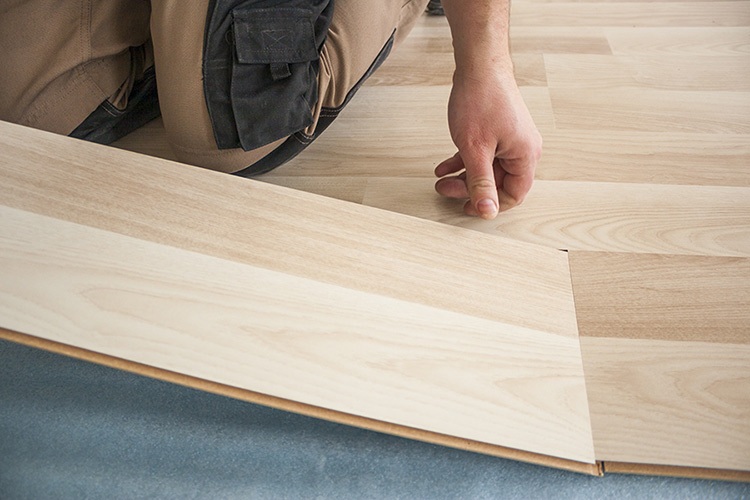
Depending on the installation method, the right underlayment can provide significant benefits. For nail-down floors, we use a layer of silicone vapor shield or felt paper to prevent moisture transfer and reduce friction between the wood and the subfloor. For floating floors, high-quality foam or cork underlayments can provide sound dampening and a thermal barrier, making the floor feel warmer and quieter.
These materials are not "optional extras" in our eyes; they are essential components of a high-performing floor. We take the time to explain which underlayment is right for your specific project and why it matters for the long-term health of your home.
Why Proper Prep Saves You Money
It may be tempting to skip or rush the subfloor preparation to save on labor costs, but this is a classic "penny wise, pound foolish" mistake. The cost of tearing out a buckled or squeaky floor and replacing it is exponentially higher than the cost of doing the preparation correctly the first time.
By investing in professional subfloor prep, you are ensuring that your floors remain silent, stable, and beautiful for the entire life of your home. Our reputation in the Yorktown area is built on this "foundation-first" philosophy. We don't cut corners because we want our work to stand as a testament to quality for generations.
The Foundation of a Beautiful Home
A beautiful hardwood floor is like a high-performance engine; it requires every component to be in perfect alignment to function correctly. By focusing on the subfloor, we ensure that your investment is protected from the ground up. Don't leave your new floors to chance. Contact the experts at DOM Wood Floors today to ensure your next flooring project starts with a perfect foundation.


